For owners who don't know us yet
Fix one thing first
We walk your customer route the way a customer would and show you where it has errors. Free, with no commitment.
Ask for a free Journey Preview
Diagnostic case study · Behavioural science marketing for hospitality
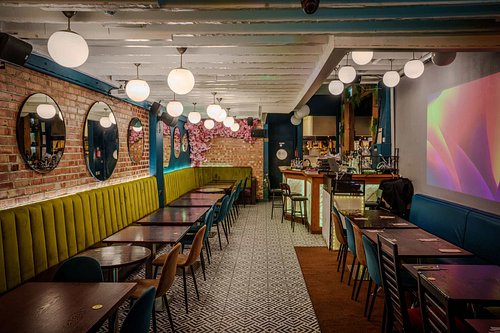
ESQ Cocktail Bar and Grill is a West African restaurant and late-night venue on Old Kent Road, London. It wanted more bookings, more sales, more visibility. Most restaurant marketing would have started with tactics. As a boutique, research-led hospitality marketing consultancy, we started with the customer's decision.
The challenge
ESQ had everything a marketer dreams of: a distinctive offer, late-night hours no competitor matched, ten thousand Instagram followers. Yet bookings lagged, the website leaked demand, and every marketing decision was a guess. The brief was the question we build our whole practice on: why do customers actually choose one restaurant over another, and what would make more of them choose ESQ?
What we did
What the research found
Ease and control had the strongest correlation with booking intent (Spearman's ρ, perceived behavioural control, 33 booking customers)
Social influence came second: what friends, reviews and social media say (subjective norm)
Of website traffic came from the UK, with over half arriving through branded searches alone
Range of likes across Instagram posts, the signature of inconsistent posting without a content plan
How easy and in-control the process felt had the strongest link to booking intent. Yet the audit found a congested homepage, no visible menu or search, and a mobile journey that took real effort. That made friction the first thing to fix, ahead of louder marketing.
Social influence, what friends, reviews and social media say, had the second-strongest link to booking intent. That pointed budget towards reviews, word of mouth, referral mechanics and consistent community engagement rather than pure advertising.
These figures come from our own survey of 33 booking customers at ESQ, analysed with Spearman correlations. The research is unpublished and not peer-reviewed, and it describes one venue: every client gets its own measure from its own diagnostic.
The strategy
Every recommendation traced back to a measured finding, organised into six workstreams and sequenced as a 90-day programme.
Rebuild the website around ease: visible menu, mobile first, GDPR compliant, measurable.
Referral mechanics, review generation and community engagement, where the data said the power sits.
A structured content plan across four platforms to end the 9-to-1,450-like lottery.
Email and SMS retention flows, because most surveyed customers had visited only once.
Vegan and alcohol-free options, late-night deals, seasonal packages, sustainable packaging.
Keep penetration pricing where it wins, flex with measured spending behaviour.
These are the objectives the strategy was designed and scoped against, stated here for transparency. This engagement delivered the research and the strategy; implementation sat with the client.
Related reading
Your business
ESQ’s study was done before the Journey Diagnostic existed as a product. The method is the same.
Two ways in
For owners who don't know us yet
We walk your customer route the way a customer would and show you where it has errors. Free, with no commitment.
Ask for a free Journey PreviewFor owners who are ready
Fifteen questions name your archetype and its weak point. It is the door into the Journey Diagnostic.
Take the 2-minute assessmentPrefer to talk it through? Book a 20-minute call →Athens pilot: 5 free places from 11 January →